Esta web utiliza cookies propias y de terceros que nos permiten optimizar tu experiencia en el sitio web, evaluar su rendimiento, generar estadísticas de uso y mejorar y añadir nuevas funcionalidades. Mediante el análisis de tus hábitos de navegación podemos mostrar contenidos más relevantes y medir las interacciones con la web.
Puede obtener más información aqui.
Uma cookie é um ficheiro que se descarrega no seu computador ao aceder a determinadas páginas web.As cookies permitem a uma página web, entre outras coisas, armazenar e recuperar informação sobre os hábitos de navegação de um usuário ou do seu equipamento, gerir o acesso de usuários a zonas restritas da web, etc.Que tipo de cookies utiliza esta página web:
Este tipo de cookies permiten al usuario la navegación a través de una página web, plataforma o aplicación y la utilización de las diferentes opciones o servicios que en ella existan como, por ejemplo, controlar el tráfico y la comunicación de datos, identificar la sesión, acceder a partes de acceso restringido, seleccionar el idioma, o compartir contenidos a través de redes sociales.
| Nombre | Descripcion | Duración | Habilitado |
|---|---|---|---|
| ID de tu sesión. Te identifica en este navegador y nos permite gestionar tus cookies o almacenar tu cesta de la compra. | 8760 horas | ||
| Indica qué cookies has aceptado. | 8760 horas | ||
| Una cookie PHPSESSID es una cookie de sesión que se utiliza para identificar la sesión de un usuario en un sitio web. | 8760 horas |
Son aquéllas que posibilitan el seguimiento y análisis del comportamiento de los usuarios en nuestra página. La información recogida se utiliza para la medición de la actividad de los usuarios en la web y la elaboración de perfiles de navegación de los usuarios, con la finalidad de mejorar la web, así como los productos y servicios ofertados.
| Nombre | Descripcion | Duración | Habilitado |
|---|---|---|---|
| Es un servicio de analítica web que utiliza cookies de análisis. | 8760 horas |
Estas cookies pueden ser establecidas a través de nuestro sitio por nuestros socios publicitarios. Pueden ser utilizadas por esas empresas para crear un perfil de sus intereses y mostrarle anuncios relevantes en otros sitios. No almacenan directamente información personal, sino que se basan en la identificación única de su navegador y dispositivo de Internet. Si no permite utilizar estas cookies, verá menos publicidad dirigida.
| Nombre | Descripcion | Duración | Habilitado |
|---|
O que são os cookies?
Um cookie é um arquivo descarregado no seu computador para aceder certos sites. Os cookies permitem que um site, entre outras coisas, possa armazenar e recuperar informações sobre os hábitos de navegação de um/a usuário/a ou do seu computador, gerenciar o acesso do/a usuário/a às áreas restritas do site etc.
Que tipo de cookies utiliza este site?
Cookies de análise
São aqueles que permitem a monitorização e análise do comportamento do/a usuário/a no nosso site. A informação recolhida é usada para medir a atividade dos/as usuários/as no site e para criar perfis de navegação do/a usuário/a, a fim de melhorar o site e os produtos e serviços oferecidos.
Cookies técnicos
Permitem ao/à usuário/a navegar através dum site, plataforma ou aplicação e o uso de diferentes opções ou serviços que existem, como por exemplo o controlo do tráfego e comunicação de dados, identificar a sessão, aceder a áreas de acesso restrito, ou compartilhar conteúdos através de redes sociais.
Cookies de personalização
São aqueles que permitem adaptar a navegação no site com as suas preferências, como o idioma, navegador utilizado etc.
| Nome | Própria / Terceiros | Duração | Descrição | Proprietário |
| gat | Terceiros | 1 minuto | É usado para limitar a porcentagem de solicitações. | Google Analytics |
| _ga | Terceiros | 2 anos | É usado para distinguir os usuários. | Google Analytics |
| _gid | Terceiros | 24 horas | É usado para distinguir os usuários. | Google Analytics |
| PHPSESSID | Própria | Sesion | Cookie de sessão, desaparece quando a web é fechada. | Arnoia |
| COOKIE_CONSENT | Própria | 1 mês | Cookie de personalização. | Arnoia |
| SESS_ID | Própria | 10 dias | Cookie de sessão. | Arnoia |
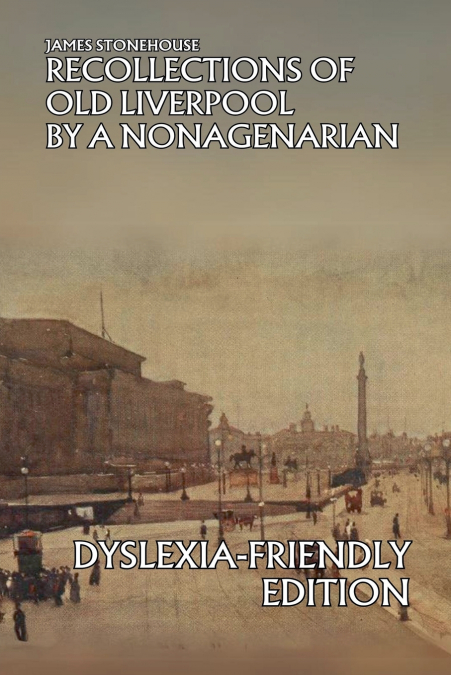
The pages are printed on cream paper (to cut glare), have wider margins and line spacing, and use a Dyslexia-friendly font (OpenDyslexic) to make the text clearer. Both bold and italic text have been minimised throughout. The text also features a ragged right edge (rather than justified) to facilitate readability, with additional spacing between each paragraph. These amendments make the text fully compliant with the British Dyslexia Association?s Dyslexia-friendly style guide. Recollections of Old Liverpool by a Nonagenarian, is an evocative memoir of early 19th-century Liverpool life, written by James Stonehouse under the pen name 'A Nonagenarian.' Stonehouse, a local historian, journalist, and Liverpool native, was keenly interested in preserving the stories, architecture, and atmosphere of his rapidly changing hometown, especially during a period of industrial growth that transformed Liverpool from a modest port town into a bustling metropolis.The book, first published in 1863, provides vivid descriptions of Liverpool from around the 1770s onward, capturing the essence of the town?s streets, customs, and the lives of its people. Stonehouse describes a Liverpool rich in character and charm, detailing old landmarks, public houses, theatres, and the Mersey waterfront. He reminisces about sights like St. George?s Dock, Liverpool Castle, and St. Nicholas Church. In each memory, he brings to life the local characters of the time-dock workers, street vendors, merchants, and theatre-goers-all in a narrative style that feels personal and conversational.The book is particularly treasured for its eyewitness accounts and meticulous descriptions, offering invaluable insights into the city?s social customs, trade, and architecture. He recounts from first-hand experience major events, local folklore, and specific people of note, such as Joseph Williamson, the 'Mole of Edge Hill,' known for his mysterious tunnels beneath the city, as well as visits to and the history of Mother Redcap?s over the Mersey in New Brighton, and the Fall of St. Nicholas? Church Spire in Chapel Street in 1810, killing 25 people and injuring a further twenty-four.Stonehouse?s reflections are both nostalgic and insightful. They highlight the rapid and often bittersweet progress that came with urban expansion and industrialisation and are a fascinating and enjoyable insight into old Liverpool for historians and casual observers alike.