Esta web utiliza cookies propias y de terceros que nos permiten optimizar tu experiencia en el sitio web, evaluar su rendimiento, generar estadísticas de uso y mejorar y añadir nuevas funcionalidades. Mediante el análisis de tus hábitos de navegación podemos mostrar contenidos más relevantes y medir las interacciones con la web.
Puede obtener más información aqui.
Uma cookie é um ficheiro que se descarrega no seu computador ao aceder a determinadas páginas web.As cookies permitem a uma página web, entre outras coisas, armazenar e recuperar informação sobre os hábitos de navegação de um usuário ou do seu equipamento, gerir o acesso de usuários a zonas restritas da web, etc.Que tipo de cookies utiliza esta página web:
Este tipo de cookies permiten al usuario la navegación a través de una página web, plataforma o aplicación y la utilización de las diferentes opciones o servicios que en ella existan como, por ejemplo, controlar el tráfico y la comunicación de datos, identificar la sesión, acceder a partes de acceso restringido, seleccionar el idioma, o compartir contenidos a través de redes sociales.
| Nombre | Descripcion | Duración | Habilitado |
|---|---|---|---|
| ID de tu sesión. Te identifica en este navegador y nos permite gestionar tus cookies o almacenar tu cesta de la compra. | 8760 horas | ||
| Indica qué cookies has aceptado. | 8760 horas | ||
| Una cookie PHPSESSID es una cookie de sesión que se utiliza para identificar la sesión de un usuario en un sitio web. | 8760 horas |
Son aquéllas que posibilitan el seguimiento y análisis del comportamiento de los usuarios en nuestra página. La información recogida se utiliza para la medición de la actividad de los usuarios en la web y la elaboración de perfiles de navegación de los usuarios, con la finalidad de mejorar la web, así como los productos y servicios ofertados.
| Nombre | Descripcion | Duración | Habilitado |
|---|---|---|---|
| Es un servicio de analítica web que utiliza cookies de análisis. | 8760 horas |
Estas cookies pueden ser establecidas a través de nuestro sitio por nuestros socios publicitarios. Pueden ser utilizadas por esas empresas para crear un perfil de sus intereses y mostrarle anuncios relevantes en otros sitios. No almacenan directamente información personal, sino que se basan en la identificación única de su navegador y dispositivo de Internet. Si no permite utilizar estas cookies, verá menos publicidad dirigida.
| Nombre | Descripcion | Duración | Habilitado |
|---|
O que são os cookies?
Um cookie é um arquivo descarregado no seu computador para aceder certos sites. Os cookies permitem que um site, entre outras coisas, possa armazenar e recuperar informações sobre os hábitos de navegação de um/a usuário/a ou do seu computador, gerenciar o acesso do/a usuário/a às áreas restritas do site etc.
Que tipo de cookies utiliza este site?
Cookies de análise
São aqueles que permitem a monitorização e análise do comportamento do/a usuário/a no nosso site. A informação recolhida é usada para medir a atividade dos/as usuários/as no site e para criar perfis de navegação do/a usuário/a, a fim de melhorar o site e os produtos e serviços oferecidos.
Cookies técnicos
Permitem ao/à usuário/a navegar através dum site, plataforma ou aplicação e o uso de diferentes opções ou serviços que existem, como por exemplo o controlo do tráfego e comunicação de dados, identificar a sessão, aceder a áreas de acesso restrito, ou compartilhar conteúdos através de redes sociais.
Cookies de personalização
São aqueles que permitem adaptar a navegação no site com as suas preferências, como o idioma, navegador utilizado etc.
| Nome | Própria / Terceiros | Duração | Descrição | Proprietário |
| gat | Terceiros | 1 minuto | É usado para limitar a porcentagem de solicitações. | Google Analytics |
| _ga | Terceiros | 2 anos | É usado para distinguir os usuários. | Google Analytics |
| _gid | Terceiros | 24 horas | É usado para distinguir os usuários. | Google Analytics |
| PHPSESSID | Própria | Sesion | Cookie de sessão, desaparece quando a web é fechada. | Arnoia |
| COOKIE_CONSENT | Própria | 1 mês | Cookie de personalização. | Arnoia |
| SESS_ID | Própria | 10 dias | Cookie de sessão. | Arnoia |
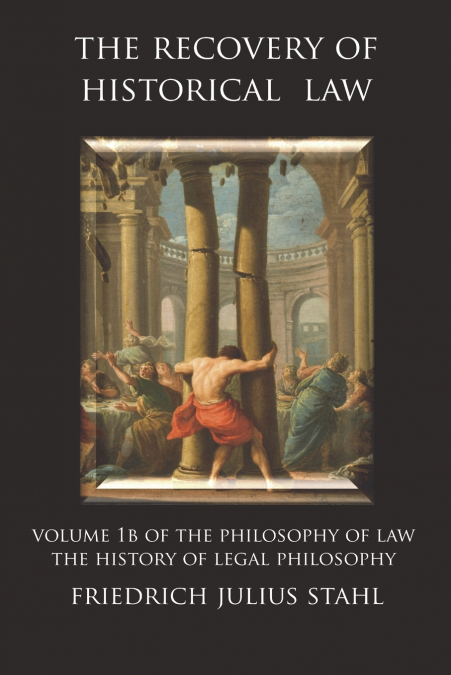

As the world reels from crisis to crisis, the most serious one seems to draw the least attention. And that is the crisis of the Western mind. The seeds of radical subjectivism sown at the time of a previous such crisis, chronicled in Paul Hazard?s Crisis of the European Mind, have now borne fruit, fruit of such stupendous magnitude that they threaten to drag us down into the depths of cultural despair.In The Rise and Fall of Natural Law, this descent into the maelstrom was chronicled from its origin to its inevitable conclusion - at least, in the world of intellect. Culture lags intellect, but it is never insulated from it. Ideas do have consequences. The intellectual counterpart to our cultural crisis already played itself out 200 years ago. And the crisis of the European mind, by which intellectual culture shifted from Revelation to Reason, found its fitting conclusion in the work of the ultimate solipsist, Johann Gottlieb Fichte. Fichte?s focus on enthusiastic conviction and the primacy of the subjective makes him the prophet of the modern world. Indeed, his orientation has now triumphed for all to see. His story, and the stories of those leading up to him - the leading characters in 'the Rise and Fall of Natural Law' - are crucial to understanding the genesis of the modern world.But that is not the end of the story, for history goes on. That spot, precisely where the first half of Stahl?s history of legal philosophy leaves off, is where the second half picks up. The Recovery of Historical Law narrates the attempts to overcome this radical subjectivism and establish a functioning social order in which the ideal matches up with the real, the theory is in harmony with the practice.After discussing the work of Locke, Montesquieu, Constant, and the Doctrinaires, all of whom functioned fully within the framework of autonomous natural law while attempting to mitigate it, Stahl reveals the hero of the story: Friedrich Schelling. It was Schelling who initiated the gargantuan task of reorienting philosophy away from subjectivism and back toward objective reality. Stahl characterizes this as a 'Samsonesque act' whereby Schelling 'lifted the temple of the previous philosophy off of its pillars and buried the whole army of enemies, himself included, under its ruins.' For one thing, this explains the cover illustration, 'Samson Destroying the Philistine Temple.' For another, it intimates how Schelling, like Moses, stood at the entry to the Promised Land without entering in. Schelling?s philosophy is an exercise in pantheism, an orientation from which he struggled to free himself later in life. And in fact, Hegel, his great fellow laborer in so-called 'speculative philosophy,' took that pantheism and turned it into a mighty system in its own right. A rabbit trail that carried many into another dead end, one with which we wrestle today: 'conscious' or 'woke' big government.But that is not the end of the story. Schelling?s first fruits were recovered by the Historical School of Jurisprudence, led by Friedrich Carl von Savigny. Here the work of Counter-Revolutionaries such as Joseph de Maistre and Edmund Burke was carried forward to bear fruit for jurisprudence. And this is the foundation for Stahl?s own system, as contained in Volume II: The Doctrine of Law and State on the Basis of the Christian World-View. It is on this basis that the laborious task to reconstruct Western civilization can begin. And not a moment too soon.