Esta web utiliza cookies propias y de terceros que nos permiten optimizar tu experiencia en el sitio web, evaluar su rendimiento, generar estadísticas de uso y mejorar y añadir nuevas funcionalidades. Mediante el análisis de tus hábitos de navegación podemos mostrar contenidos más relevantes y medir las interacciones con la web.
Puede obtener más información aqui.
Uma cookie é um ficheiro que se descarrega no seu computador ao aceder a determinadas páginas web.As cookies permitem a uma página web, entre outras coisas, armazenar e recuperar informação sobre os hábitos de navegação de um usuário ou do seu equipamento, gerir o acesso de usuários a zonas restritas da web, etc.Que tipo de cookies utiliza esta página web:
Este tipo de cookies permiten al usuario la navegación a través de una página web, plataforma o aplicación y la utilización de las diferentes opciones o servicios que en ella existan como, por ejemplo, controlar el tráfico y la comunicación de datos, identificar la sesión, acceder a partes de acceso restringido, seleccionar el idioma, o compartir contenidos a través de redes sociales.
| Nombre | Descripcion | Duración | Habilitado |
|---|---|---|---|
| ID de tu sesión. Te identifica en este navegador y nos permite gestionar tus cookies o almacenar tu cesta de la compra. | 8760 horas | ||
| Indica qué cookies has aceptado. | 8760 horas | ||
| Una cookie PHPSESSID es una cookie de sesión que se utiliza para identificar la sesión de un usuario en un sitio web. | 8760 horas |
Son aquéllas que posibilitan el seguimiento y análisis del comportamiento de los usuarios en nuestra página. La información recogida se utiliza para la medición de la actividad de los usuarios en la web y la elaboración de perfiles de navegación de los usuarios, con la finalidad de mejorar la web, así como los productos y servicios ofertados.
| Nombre | Descripcion | Duración | Habilitado |
|---|---|---|---|
| Es un servicio de analítica web que utiliza cookies de análisis. | 8760 horas |
Estas cookies pueden ser establecidas a través de nuestro sitio por nuestros socios publicitarios. Pueden ser utilizadas por esas empresas para crear un perfil de sus intereses y mostrarle anuncios relevantes en otros sitios. No almacenan directamente información personal, sino que se basan en la identificación única de su navegador y dispositivo de Internet. Si no permite utilizar estas cookies, verá menos publicidad dirigida.
| Nombre | Descripcion | Duración | Habilitado |
|---|
O que são os cookies?
Um cookie é um arquivo descarregado no seu computador para aceder certos sites. Os cookies permitem que um site, entre outras coisas, possa armazenar e recuperar informações sobre os hábitos de navegação de um/a usuário/a ou do seu computador, gerenciar o acesso do/a usuário/a às áreas restritas do site etc.
Que tipo de cookies utiliza este site?
Cookies de análise
São aqueles que permitem a monitorização e análise do comportamento do/a usuário/a no nosso site. A informação recolhida é usada para medir a atividade dos/as usuários/as no site e para criar perfis de navegação do/a usuário/a, a fim de melhorar o site e os produtos e serviços oferecidos.
Cookies técnicos
Permitem ao/à usuário/a navegar através dum site, plataforma ou aplicação e o uso de diferentes opções ou serviços que existem, como por exemplo o controlo do tráfego e comunicação de dados, identificar a sessão, aceder a áreas de acesso restrito, ou compartilhar conteúdos através de redes sociais.
Cookies de personalização
São aqueles que permitem adaptar a navegação no site com as suas preferências, como o idioma, navegador utilizado etc.
| Nome | Própria / Terceiros | Duração | Descrição | Proprietário |
| gat | Terceiros | 1 minuto | É usado para limitar a porcentagem de solicitações. | Google Analytics |
| _ga | Terceiros | 2 anos | É usado para distinguir os usuários. | Google Analytics |
| _gid | Terceiros | 24 horas | É usado para distinguir os usuários. | Google Analytics |
| PHPSESSID | Própria | Sesion | Cookie de sessão, desaparece quando a web é fechada. | Arnoia |
| COOKIE_CONSENT | Própria | 1 mês | Cookie de personalização. | Arnoia |
| SESS_ID | Própria | 10 dias | Cookie de sessão. | Arnoia |
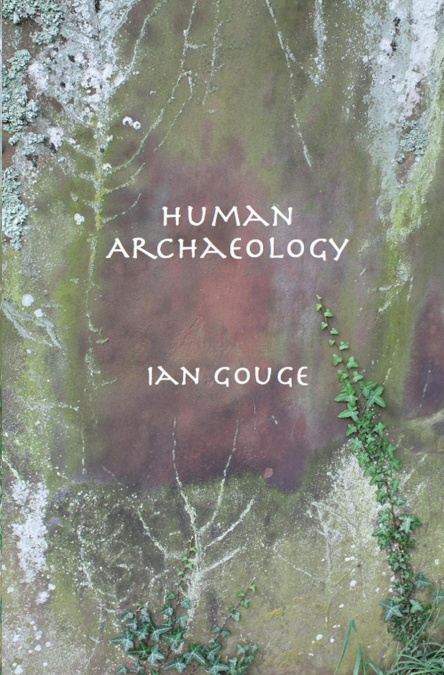
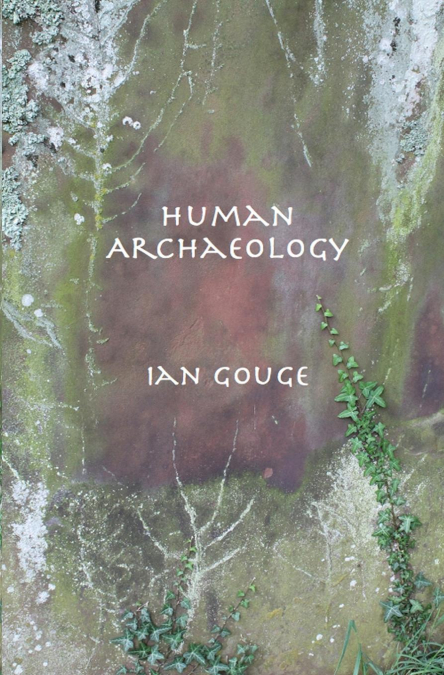
If there is a unifying theme running through &lsquo,Human Archaeology&rsquo, it is the relationship between Man and his history, memory, and how looking back at the past - at both its events and its artefacts - gives us the context for who we are.This reflection manifests itself in a number of ways. In poems such as &ldquo,Ripples&rdquo, or &ldquo,Beyond the Boundary&rdquo, we look back into history in a traditional, narrative way. Far from being idealised, however, experiences are never far from disappointment, especially when it comes to journeying - as in &ldquo,The Grand Tour&rdquo,, &ldquo,Exploration&rdquo,, or &ldquo,Northwest Passage&rdquo, - where we see reality jar with hope or expectation.If such viewpoints might be regarded as &lsquo,romantic&rsquo, then we shouldn&rsquo,t be surprised as there is romance in this volume too. However, this is also often unsatisfying because the outcomes are not ones of fulfilment (&ldquo,Rose&rdquo,), or have only generated disappointment or confusion (&ldquo,The Dissemblance of Rock&rdquo,), or are decidedly un-romantic (&ldquo,Standing in Doorways&rdquo,, &ldquo,Love-locked&rdquo,).That the two strands - history and romance - are linked also runs through many of the pieces, and nowhere more explicitly than in &ldquo,Abstraction&rdquo, which opens with &ldquo,Romance is an overlay on reality&rdquo,, and elsewhere is the assertion that what we view as &lsquo,history&rsquo, is simply a romantic interpretation of the past: &ldquo,a romantic myth born from a need to believe in something / and that what we have done matters&rdquo, (&ldquo,Mirage&rdquo,). More significantly perhaps, is the notion that true history cannot be known: &ldquo,True history resides in all the photographs / that were never taken, / beneath veneers never applied, / like a ghost silently pacing marble halls / sensed but unrecognised&rdquo, (&ldquo,Abstraction&rdquo,).Whether this undermines the thrust of the poems that focus on the fabric of history - perhaps most evident in the &ldquo,Archaeology&rdquo, poems themselves (I, II, III and IV) - is a moot point. Perhaps it serves only to highlight just how difficult and complex the relationship between us and our history actually is.That real conflict is an ever-present in our past - and in personal lives - is echoed too in poems such as &ldquo,Days of Tea and Backgammon&rdquo,, &ldquo,Reading the Runes&rdquo,, and &ldquo,War Artist&rdquo,, and where there is such conflict there will always be a fight for justice and liberty. In some respects, the poet - whilst keeping a safe distance from much of the debate, acting primarily as overseer and interpreter - is as much a rebel as those who appear in pieces such as &ldquo,The Revolutionary&rdquo,, &ldquo,Assassination&rdquo, or &ldquo,Uprising&rdquo,. And perhaps sharing some of their ideals, in one or two instances - most noticeably &ldquo,The Permanence of Shrapnel&rdquo, and &ldquo,Camouflage&rdquo, - the author lets his guard down in a